Skip to content


Peptide therapy has been coming up a lot lately, and honestly, it can be hard to keep up. One day it’s being mentioned in a fitness forum, the next it’s showing up in a conversation about aging or brain fog. If you’ve been seeing it everywhere but still aren’t totally sure what it is, that’s completely fair. It sounds more complicated than it actually is.
At Ehden Medical in Latham, NY, peptide therapy is offered as a personalized, provider-guided approach to supporting your body’s own processes. Here’s what it actually is, how it works, and how to know whether it might be worth exploring for your own health goals.
How does peptide therapy work, and what kinds of health goals can it support?
Peptide therapy is a provider-guided treatment that uses targeted peptide molecules to support specific functions in the body, with potential improvements in areas such as muscle repair, fat metabolism, cognitive health, immune function, and recovery. Peptides are short chains of amino acids that act as signaling molecules, telling the body to carry out particular tasks it may be underperforming. The therapy is best suited for adults with clear wellness goals who have gone through a proper provider evaluation, and it is individualized based on each person’s health profile and needs.
What Peptide Therapy Actually Is
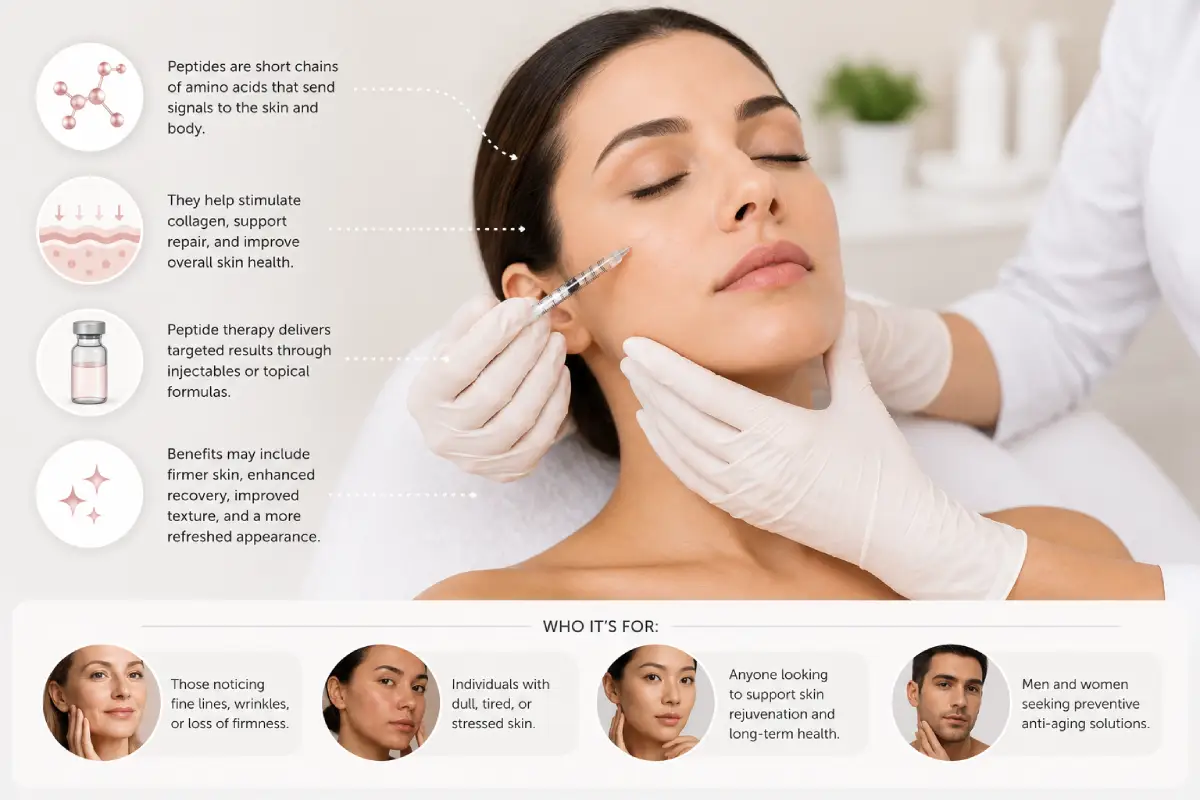
So what actually are peptides? They’re short chains of amino acids, which are the same basic building blocks your body uses to make proteins. Your body already makes them on its own, and their job is essentially to send signals. They tell different parts of your body to do specific things, like repair tissue, release a hormone, or calm down an inflammatory response.
Peptide therapy involves administering carefully selected peptides to support areas where your body may be underperforming, with the goal of potential improvements in those functions. It’s worth noting that this isn’t the same as grabbing a supplement off a store shelf. The peptides used in therapy are selected by a provider based on your actual health profile, not a general formula made for everyone.
It’s also worth being upfront: peptide therapy is an evolving area of medicine. Research is active and genuinely promising, but many applications are still considered off-label or experimental. A responsible provider will be honest with you about that distinction from the start.
How Peptide Therapy Works in the Body
Different peptides interact with different systems in the body. Some influence growth hormone pathways, which affect how your body builds muscle and metabolizes fat. Others target immune function, inflammation response, or cognitive signaling pathways.
When a peptide is administered, it travels to the receptors it’s designed to interact with and triggers a specific biological response. Here’s how delivery typically works:
- Subcutaneous injection is the most common route, allowing the peptide to enter the bloodstream efficiently
- Topical or oral delivery is used for certain peptides depending on the goal, though it is less common in clinical protocols
The reason this approach appeals to many patients is that it works with the body’s existing systems rather than overriding them. You’re giving your body a more precise signal, not introducing a foreign compound.
What Peptide Therapy Is Used For
The range of potential applications is one reason peptide therapy has generated so much interest. At Ehden Medical, treatment is individualized based on your health goals and a thorough provider evaluation, so the peptides selected for one person may look very different from those recommended for another.
Some of the most common goals patients bring to these conversations, each representing a potential benefit rather than a guaranteed outcome, include:
- Supporting muscle mass and strength, particularly for those experiencing age-related muscle loss
- Fat loss with peptide treatment, especially when combined with a structured nutrition and exercise plan
- Improving sleep quality and physical recovery
- Enhancing cognitive function and mental clarity
- Accelerating healing from injury or training
- Supporting skin health and reducing visible signs of aging
- Reducing chronic inflammation
Some patients report noticeable improvements within a few weeks of beginning treatment. That said, results vary based on the specific peptides used, individual health factors, and consistency with the protocol. No two people respond exactly the same way, and a good provider will set realistic expectations from the start.
Who Peptide Therapy Is a Good Fit For
If you’ve been doing the right things, eating well, exercising, prioritizing sleep, and still feel like something isn’t quite where it should be, that’s often the starting point for patients who benefit most from peptide therapy.
Good candidates are generally adults who want to address a specific concern, such as:
- Building or preserving muscle mass
- Supporting weight management efforts that have plateaued
- Recovering more efficiently from physical training or injury
- Managing cognitive changes that are affecting daily life
People who have already built a solid health foundation tend to get the most from peptide therapy because it’s designed to optimize, not replace, the basics. Candidacy is determined through a proper evaluation, and the treatment plan is built around your individual health profile. At Ehden Medical in Latham, NY, the consultation process is where your goals, health history, and lab work come together to determine which peptides, if any, make sense for you.
Who Should Wait or Talk to a Provider First
Not everyone is an immediate candidate, and that’s worth knowing before you come in. Peptide therapy may not be appropriate for:
- Individuals with certain active medical conditions
- Those who are pregnant or breastfeeding
- Those on medications that could interact with specific peptides
If you haven’t had a baseline health evaluation yet, that’s really where the conversation needs to begin. It’s not about making access harder than it needs to be. It’s just that knowing what’s actually going on with your body first makes the whole process more worthwhile. A treatment plan built around your real numbers and health history is going to serve you a lot better than one that isn’t.
What to Expect From the Process
The process begins with a consultation, not a prescription. Your provider at Ehden Medical will review your health history, discuss your goals, and build a treatment plan tailored to you. Here’s a general sense of what the experience looks like:
- Consultation first — your provider assesses your health history, goals, and any relevant lab work
- Personalized protocol — specific peptides are selected based on what your body actually needs
- Ongoing treatment — most protocols run over several weeks, with improvements building gradually
- At-home administration — many patients self-administer injections after being guided through the process by their provider
Side effects are typically mild. The most commonly reported is temporary soreness at the injection site. Serious reactions are uncommon, though your provider will discuss what to watch for and when to reach out.
Ready to Find Out If Peptide Therapy Is Right for You?
If anything in this post resonated with where you are right now, the next step is a conversation. At Ehden Medical in Latham, NY, our team is here to help you figure out whether peptide therapy fits your goals, your health history, and your life. Book your consultation today and get answers specific to you.